INTRODUCTION
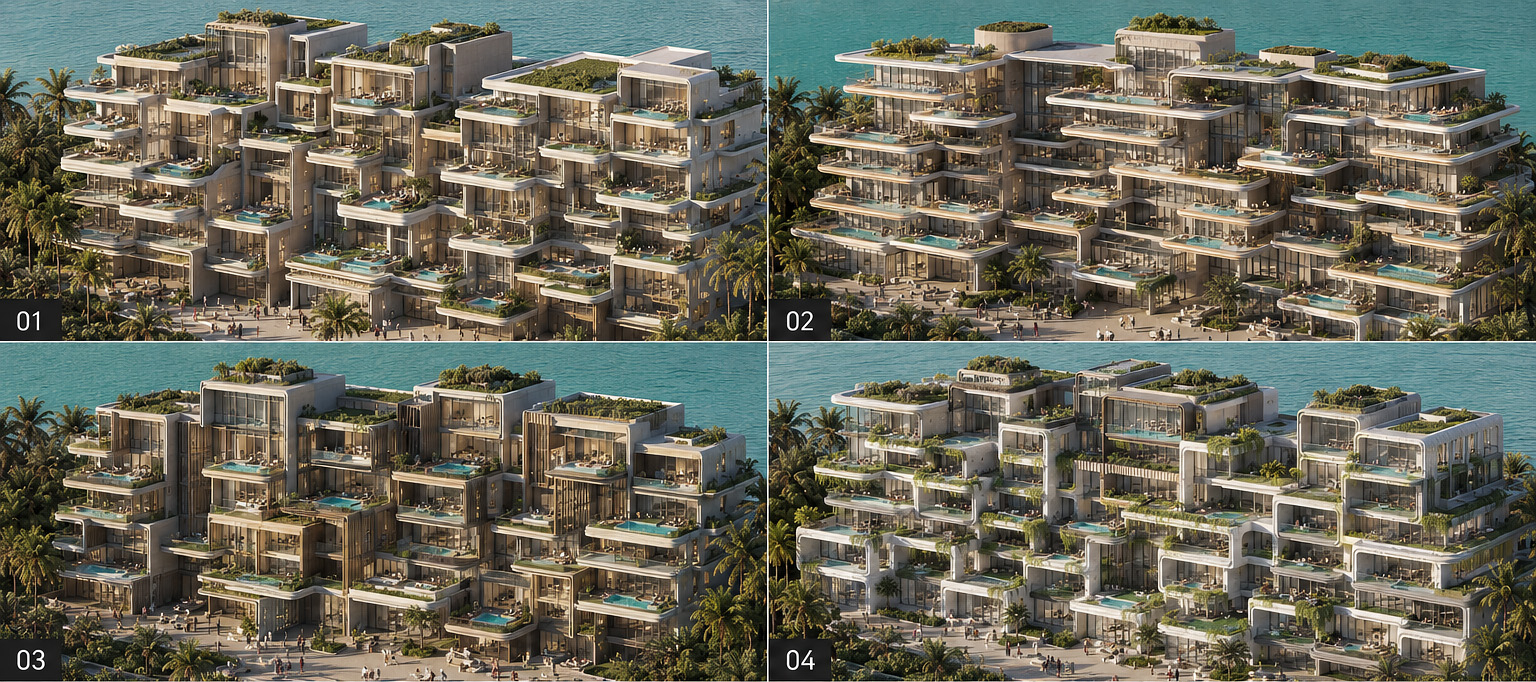
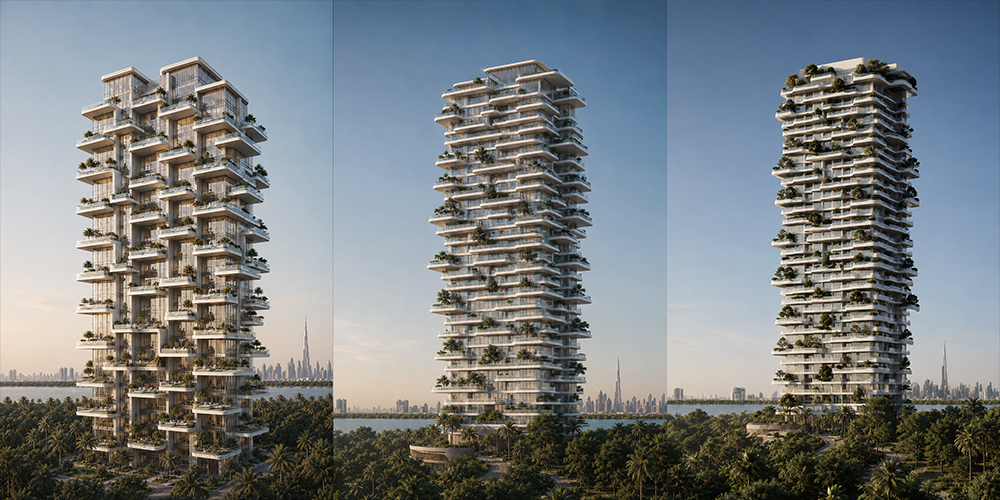
Contemporary architecture is evolving at an unprecedented pace, driven by the increasing complexity, scale, and speed of large-scale developments — particularly within rapidly expanding urban environments such as Dubai. Today’s projects demand not only strong design vision, but also faster delivery, higher coordination accuracy, adaptability, performance integration, and the ability to manage increasingly sophisticated systems across multiple disciplines.
Despite these demands, architectural workflows often remain fragmented and linear, where design, analysis, documentation, and coordination operate as disconnected processes. Critical issues are frequently discovered only during later project stages — when design flexibility is at its lowest — resulting in redesign, coordination conflicts, delays, and unnecessary project risk.
This workshop introduces a computational design methodology focused on bridging these gaps through the creation of integrated architectural systems. Through a hands-on Grasshopper workflow, participants will explore how computational thinking can transform the way architects approach design development, adaptive façade systems, data management, automation, visualization, and interdisciplinary coordination — enabling the creation of intelligent, scalable, and highly adaptable design workflows for contemporary architecture.
LEARNING OUTCOME
Participants will learn how to develop scalable computational workflows that integrate:
A. Parametric Modelling
B. Data Structures
C. Facade Systems
D. Geometry Analysis
E. Data Visualization
F. Automation
Rather than focusing purely on software operations, the workshop emphasizes computational thinking as a design methodology — enabling architects to create intelligent, adaptable, and scalable systems capable of responding to real-world architectural challenges.
The methodologies explored throughout the workshop reflect approaches implemented on large-scale international projects, including workflows developed within Zaha Hadid Architects, where integrated computational systems have been used to support complex project delivery, minimize coordination risks, and enhance design adaptability.
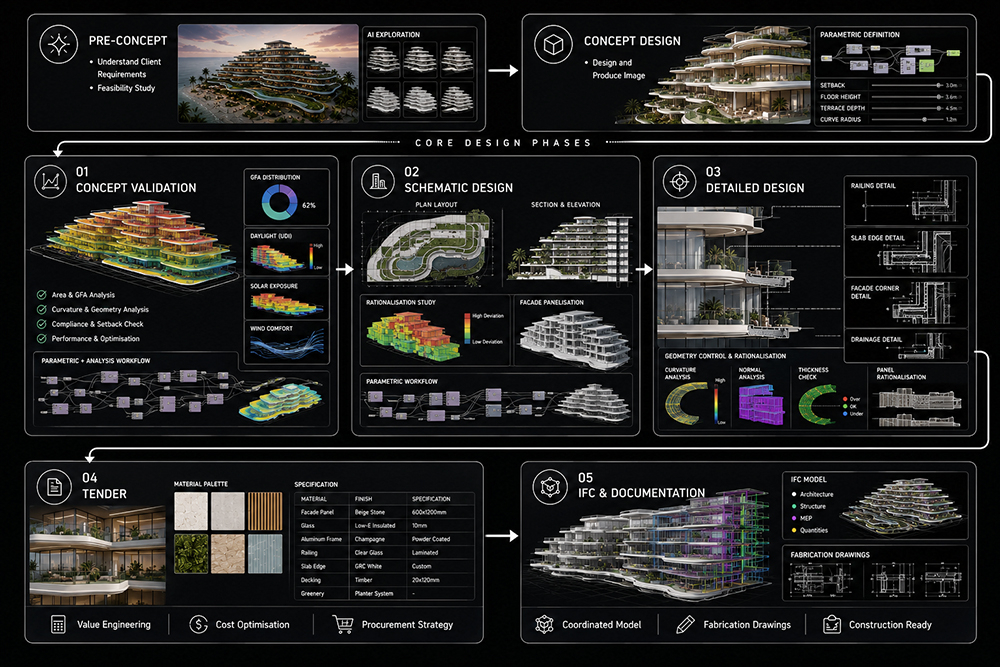
By the end of the workshop, participants will understand how computational design can:
A. Allow Architects to Focus More Deeply on Design Quality and Innovation
B. Enhance Design Decision-Making Process
C. Increase Coordination Efficiency
D. Accelerate Iteration, and Collaboration
SCHEDULE & FORMAT
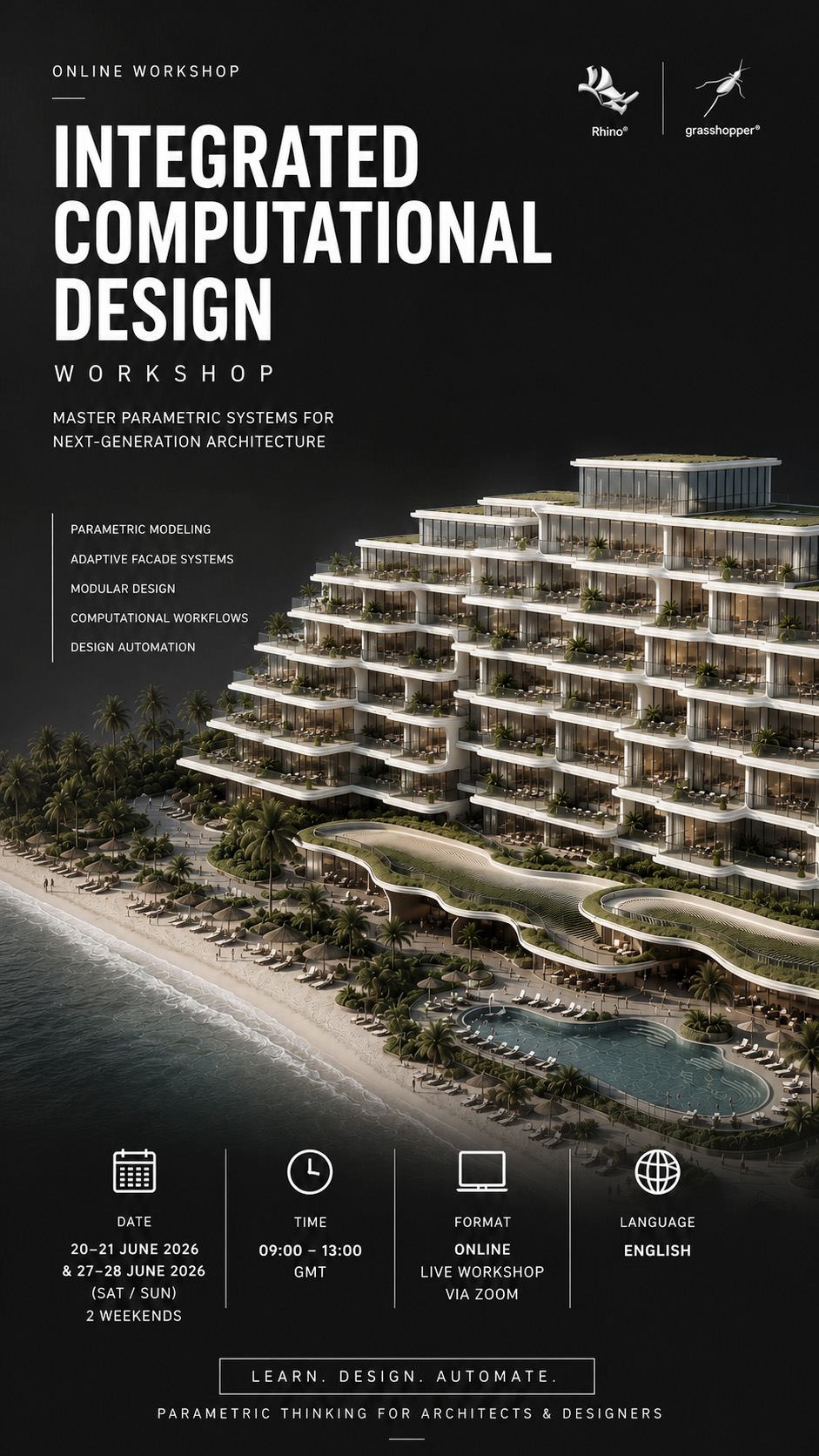
Date : 2026/06/20-21 & 06/27-28 (Sat/Sun) 2 weekends
Time : 9:00-13:00 GMT (4 hours each session / Total 16 hours)
Course Format : Online (Zoom)
Language : English
Target Audience : This workshop is designed for architects and designers seeking to enhance their project development process through advanced computational design workflows using Grasshopper. Participants will explore how parametric systems can be applied to contemporary architectural challenges, including adaptive facades, modular systems, design automation, and integrated computational methodologies. The course is open to individuals with a basic understanding of Grasshopper. While primarily tailored for architects, engineers, computational designers, and professionals from related disciplines are also welcome.
Software : Rhino 8 / Grasshopper
REGISTRATION>>
INSTRUCTOR >>
INSTRUCTOR REVIEW>>
COURSE DETAILS
MODULE 1 – Parametric Facade Systems
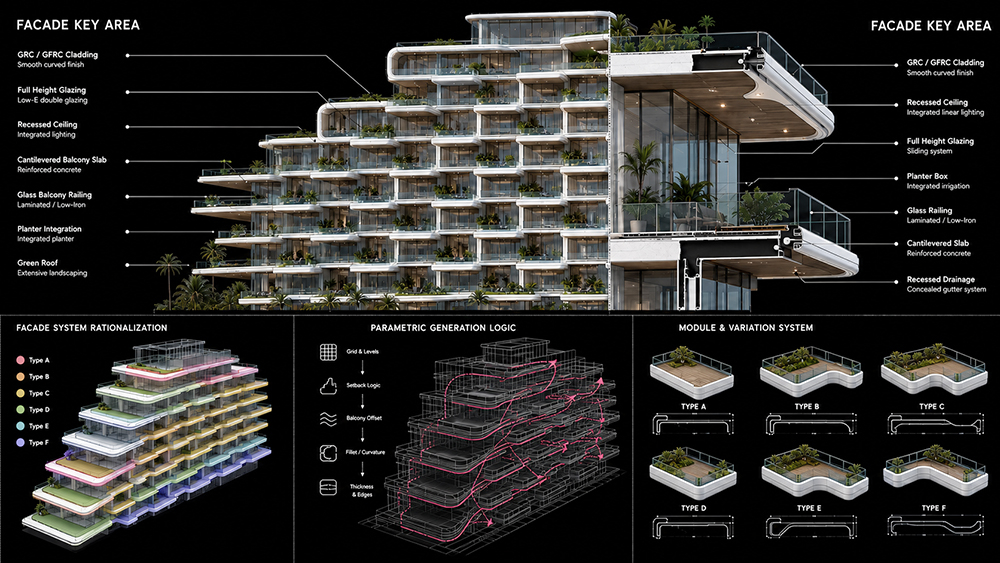
Introduction to computational thinking and rapid parametric workflows for facade exploration during conceptual design stages. Participants will learn how to quickly establish flexible facade systems for fast iteration and design exploration.
MODULE 2 -Adaptive Systems
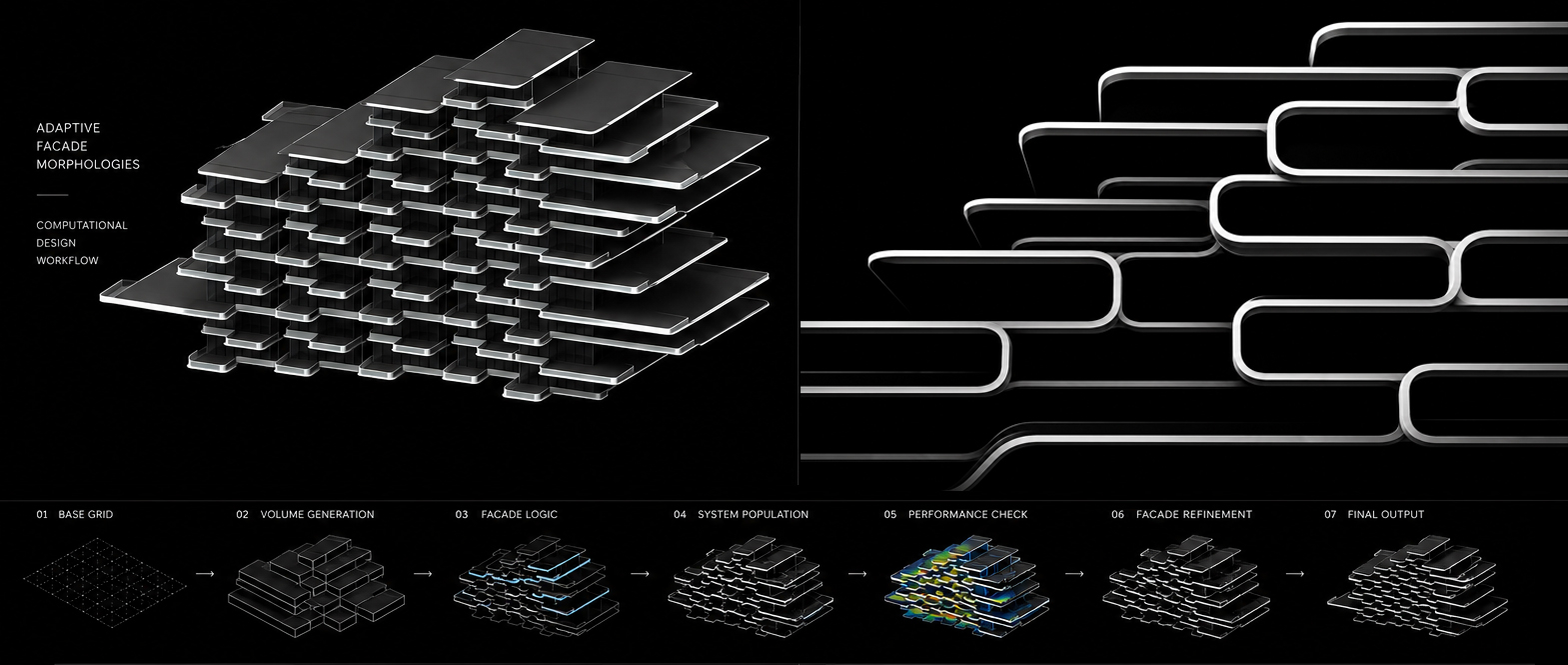
Development of intelligent facade systems capable of adapting to varying massing conditions, boundary constraints, and architectural requirements.
MODULE 3 – Architecture Case Study
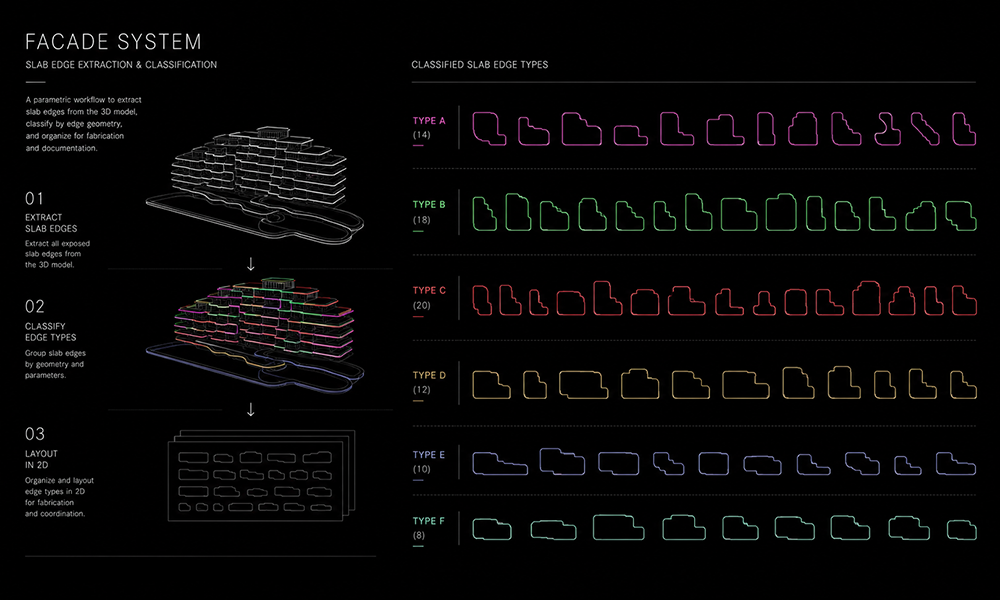
Application of computational workflows to realistic architectural project scenarios. This module explores how computational methods integrate into architectural development processes.
MODULE 4 – Integrated Computational Framework
Development of a fully integrated computational architectural framework combining geometry generation, analysis, automation, and data visualization into a unified system.